November 24, 2026
Electrical panel age: what it tells you about capacity and safety
By @brightcircuit
Every home has an electrical panel, often tucked into a basement, garage, or utility closet. It is the central point where incoming power from the utility is split into branch circuits that feed outlets, lights, and appliances. The panel itself is a metal enclosure housing circuit breakers or fuses that protect each circuit from overloads. For most homeowners, the panel is out of sight and out of mind, until a breaker trips or a renovation requires more power.
But the age and capacity of that panel matter a great deal. An older panel may have been adequate for the home when it was built, but modern electrical loads are far heavier. Understanding what your panel can handle, and recognising when it may be time for an upgrade, is a straightforward way to keep your home safe and functional.
What the panel does
The electrical panel is the distribution hub. It receives power from the utility at a certain amperage, typically 100, 150, or 200 amps for a modern home, and splits that total capacity among individual circuits. Each circuit has a breaker rated for a specific load, such as 15 amps for lighting or 20 amps for kitchen counter outlets. The breaker is a safety device: if the current on that circuit exceeds the rating, the breaker trips and cuts power, preventing the wiring from overheating and starting a fire.
Older panels often used fuses instead of breakers. A fuse works on the same principle but must be replaced after it blows. Many homes still have fuse boxes, and while they can be safe if properly maintained, they are usually paired with older wiring that may not meet modern standards.
Capacity: the main breaker rating
The main breaker is the largest switch in the panel. Its rating tells you the maximum electrical load the panel can supply to the whole house. A 60-amp main breaker was common in homes built before the 1960s. By the 1980s, 100-amp panels became standard. Today, many new homes are built with 200-amp service, especially if they include electric heat, air conditioning, an electric range, or a large water heater.
If your home still has a 60-amp or 100-amp main breaker, you may be close to its limit. The total load of all the circuits in the house cannot exceed the main breaker rating. When you add a new appliance, a heat pump, an electric vehicle charger, a hot tub, the existing panel may not have enough capacity to handle it. The result is frequent tripping of the main breaker, or worse, overheating in the panel enclosure itself.
Signs that capacity is too low
A panel that is overloaded often shows warning signs before a dangerous situation develops. Common indicators include:
- The main breaker trips regularly, especially when multiple large appliances are running at the same time.
- Breakers feel warm to the touch after normal use.
- Lights dim or flicker when a heavy appliance like a refrigerator or air conditioner cycles on.
- The panel has no space for additional circuits, all slots are filled or the panel is a type no longer manufactured.
- You hear a buzzing or crackling sound from the panel.
None of these signs should be ignored. A warm panel cover or a buzzing breaker is often a sign of loose connections or an overloaded circuit, both of which can lead to arcing and fire.
Age: what changes over time
Electrical panels age in two ways. The components themselves degrade: breakers can become less reliable after decades of use, and the insulation on internal wiring can become brittle. The second kind of aging is obsolescence. Older panel designs may lack modern safety features such as arc-fault circuit interrupters (AFCIs) or ground-fault circuit interrupters (GFCIs), which protect against specific types of faults that can cause electrocution or fire.
Panels from the 1950s and earlier often used a design called “Edison base” fuses, which are no longer approved for new installations. They also lack the space for modern double-pole breakers needed for large appliances. A panel that is more than 40 years old is generally a candidate for replacement, even if it appears to be working.
Service capacity and the electrical load calculation
An electrical load calculation is a method used to determine whether the existing service capacity is sufficient for the home’s needs. It involves adding up the wattage of all lighting, appliances, and devices that could be used at the same time, then comparing that total to the main breaker rating. A qualified electrician can perform this calculation in a few minutes.
If the load calculation shows that the total potential load exceeds 80 percent of the main breaker rating, the panel is near its limit. In practice, this means that adding any significant new load, a heat pump, a second refrigerator, a home workshop, will require upgrading the panel and possibly the service entrance cable from the utility.
Many homeowners are surprised to learn that a panel replacement does more than just add capacity. A modern panel includes more space for circuits, easier labeling, and built-in provisions for grounding and bonding that older panels lack.
Branch circuits and the risk of overheating
Inside the panel, each branch circuit connects to a breaker that feeds a specific area or appliance. Over time, these connections can loosen due to thermal cycling, the expansion and contraction of metal as it heats and cools. A loose connection creates resistance, which generates heat. That heat can damage the breaker, the bus bar it connects to, and the insulation on nearby wires.
An inspection of the panel interior by a qualified electrician can reveal signs of overheating: discolored metal, melted insulation, or a smell similar to burnt plastic. If any of these are present, the panel should be replaced rather than repaired, because the damage is often widespread inside the enclosure.
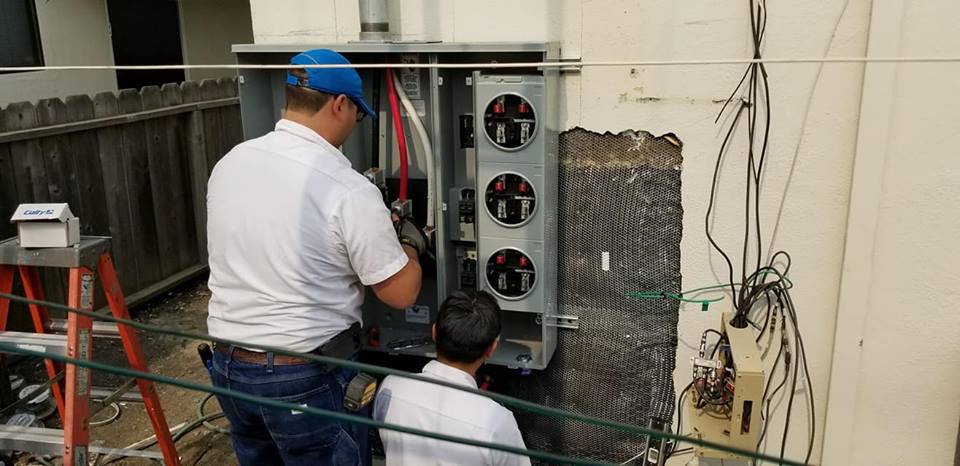
Why replacement is a professional job
Replacing an electrical panel involves working inside the live service entrance, which is the point where the utility power enters the home. The voltage at that point is typically 240 volts, and the current can be hundreds of amps. Handling that level of power requires training, proper tools, and knowledge of local codes. A mistake can cause severe injury or death, or damage the utility equipment.
For homeowners in the San Jose area, companies like Wooding Electric evaluate, replace, and upgrade electrical panels for homes and properties. An evaluation typically includes a load calculation, a visual inspection of the panel interior, and a recommendation based on the home’s current and future needs.
What to expect during a panel upgrade
The process of upgrading an electrical panel usually starts with a site visit. The electrician turns off the main breaker, removes the panel cover, and inspects the condition of the wiring, breakers, and enclosure. They check for signs of overheating, corrosion, or damage. They also verify that the panel is properly grounded and bonded.
If the panel is being replaced, the old unit is removed and a new panel of the appropriate size and rating is installed. The branch circuits are reconnected to the new breakers. In many cases, the service entrance cable from the utility must also be upgraded if the new panel has a higher amperage rating than the old one. This step requires coordination with the local power company.
After installation, the electrician tests each circuit to confirm that it is working and that the breakers trip properly. They also label the panel directory so that every circuit is identified. A well-labeled panel makes future troubleshooting and renovations far easier.
Planning for future needs
When choosing a new panel, it is wise to plan for future loads. Even if you do not currently own an electric vehicle or a heat pump, those may become standard in the coming decade. A panel with a 200-amp main breaker and space for extra circuits gives you room to grow without needing another upgrade.
Modern panels also support smart breakers and whole-home surge protectors, which can be added later. Investing in a panel with a higher capacity now is usually cheaper than replacing a panel that is already maxed out.
Safety checks homeowners can do
While you should never open the panel cover or work on live components, there are a few things you can check safely. Look at the panel cover for signs of rust or physical damage. Make sure the area around the panel is clear of clutter and stored items. If the panel is in a damp location like a basement or garage, check for moisture on the cover or nearby walls. If the panel feels warm to the touch, that is a sign of a problem inside.
Also, listen for any buzzing, humming, or crackling sounds. If you hear anything unusual, turn off the main breaker if it is safe to do so, and call a qualified electrician. Do not attempt to investigate further.
An electrical panel is a simple device, but it plays a critical role in home safety. Understanding its age and capacity helps you make informed decisions about when to upgrade. For many homes, a panel that is more than 30 years old is already operating beyond its original design limits. An evaluation by a professional can give you peace of mind and prevent a dangerous situation from developing.
Wooding Electric provides panel evaluations and upgrades for homes in the San Jose Bay Area. A thorough inspection can reveal issues that are not obvious from the outside, and a properly sized panel ensures that your home can handle the electrical demands of modern life safely and reliably.
❧